
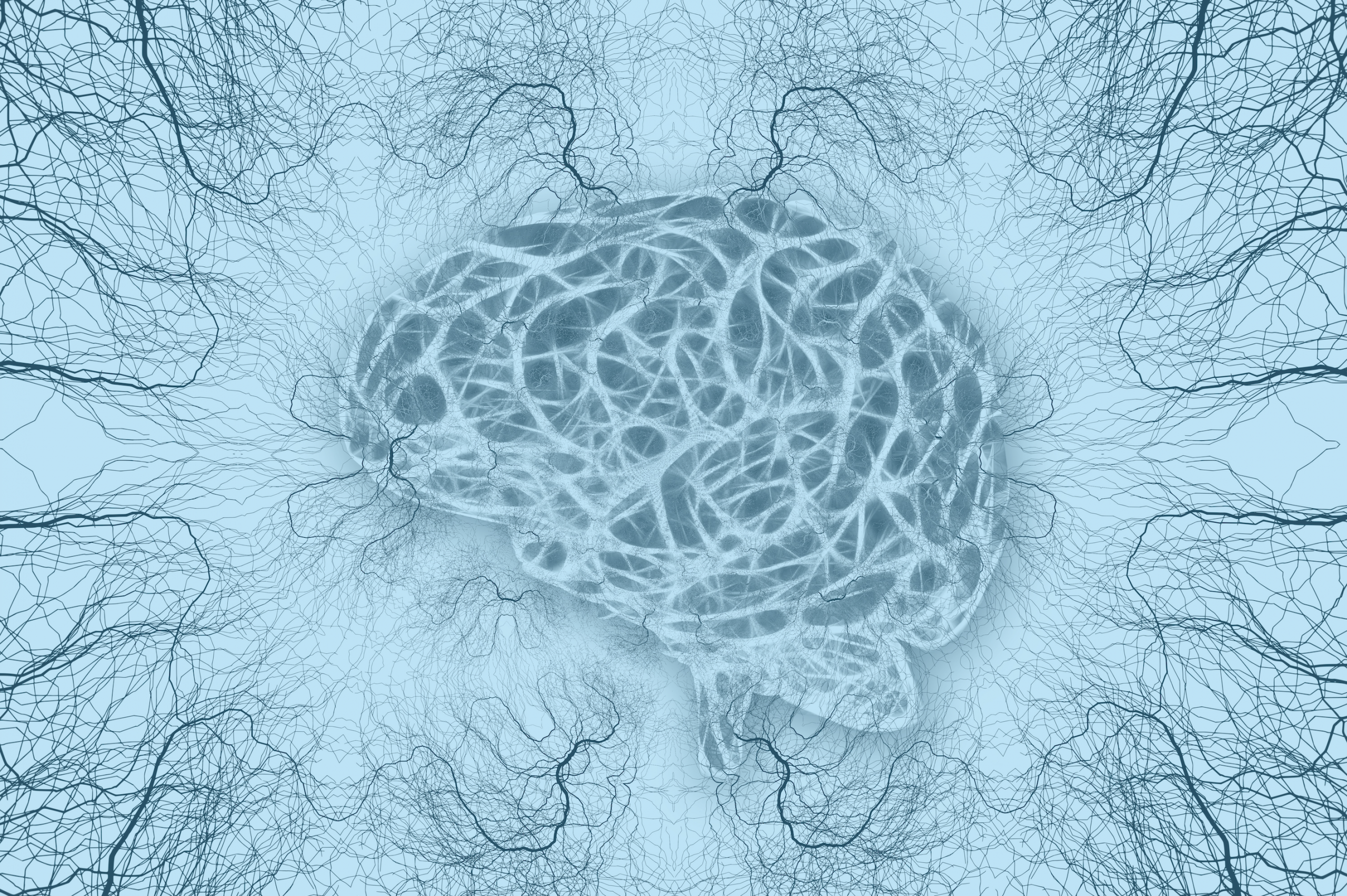
In the past, sleep was simply thought of as a passive state of existence of rest and reduced activity. However, in 2012, researchers discovered the glymphatic system, a network of channels in the brain that perform active waste clearance during sleep. This dramatically furthered the perception of sleep as a more active period and how vital it is for the mind and body.
“Glymphatic” is a combination of “glial” and “lymphatic,” since the system works as a combination of the two entities. Glial cells, or brain cells that surround and support neurons, are vital in managing the flow of cerebrospinal fluid (CSF) in the brain. During sleep, CSF flows through the channels around the brain, replacing older CSF and flushing out waste products built up when awake. Some of these substances are amyloid-beta and tau, proteins closely related to Alzheimer’s disease. The glymphatic system is generally inactive while awake, increasing by about 60% during sleep. This suggests that the brain purposely reserves this process for sleeping time.
While it is unclear why the glymphatic system is only mainly active during sleep, one important factor may be the neurotransmitter noradrenaline. During sleep, noradrenaline levels drop, and glymphatic activity rises. While awake, noradrenaline is increased in order to support alertness and attention, and the glymphatic system is suppressed. The noradrenaline constricts blood vessels in the brain, reducing the ability for CSF to be transported around and thus limiting the glymphatic system and its effects.
The implications of the important of the glymphatic system for long-term brain health is significant. Sleep deprivation has been shown to hinder the clearance of amyloid-beta and tau from the brain, and even a single night of poor sleep can lead to a measurable increase amyloid-beta levels in the brain. Chronic sleep disturbance over several years heightens the risk for neurodegenerative disease. This has caused research looking into how glymphatic function may be one of the mechanisms connecting poor sleep to Alzheimer’s disease to be studied more carefully rather than being seen as just speculative. The glymphatic system can also aid in recovery from brain injury, as clearing toxic debris is essential for healing.
Certain lifestyle factors may also support the glymphatic system, including things like regular exercise, which likely has a beneficial effect due to its implications on sleep quality and cardiovascular health. Alcohol may impair the glymphatic system, even in low amounts. Overall, the glymphatic system is a relatively new discovery that is essential for brain health and supporting overall mood, cognition, and metabolism, as well as potentially being one of the main reasons of why sleep is needed in the first place.
Holth, Jerrah K, et al. “The Sleepwake Cycle Regulates Brain Interstitial Fluid Tau in Mice and CSF Tau in Humans.” Science, vol. 363, no. 6429, 2019, pp. 880–884, doi.org/10.1126/science.aav2546, https://doi.org/10.1126/science.aav2546. Accessed 28 June 2026.
Lucey, Brendan P et al. “Effect of sleep on overnight cerebrospinal fluid amyloid β kinetics.” Annals of neurology vol. 83,1 (2018): 197-204. doi:10.1002/ana.25117
Reddy, Oliver Cameron, and Ysbrand D. van der Werf. “The Sleeping Brain: Harnessing the Power of the Glymphatic System through Lifestyle Choices.” Brain Sciences, vol. 10, no. 11, 17 Nov. 2020, p. 868, www.ncbi.nlm.nih.gov/pmc/articles/PMC7698404/, https://doi.org/10.3390/brainsci10110868.
Shokri-Kojori, Ehsan, et al. “β-Amyloid Accumulation in the Human Brain after One Night of Sleep Deprivation.” Proceedings of the National Academy of Sciences, vol. 115, no. 17, 9 Apr. 2018, pp. 4483–4488, https://doi.org/10.1073/pnas.1721694115.
Xie, Lulu, et al. “Sleep Drives Metabolite Clearance from the Adult Brain.” Science, vol. 342, no. 6156, 2013, pp. 373–377, doi.org/10.1126/science.1241224, https://doi.org/10.1126/science.1241224. Accessed 28 June 2026.